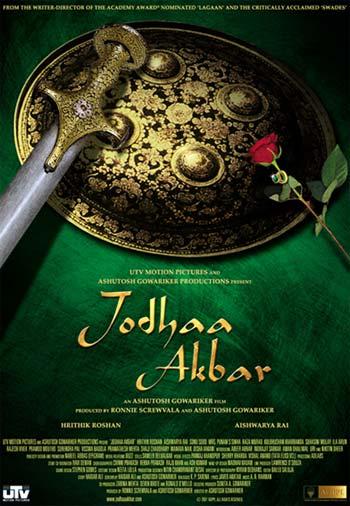
Ashutosh Gowarikar’s Jodhaa Akbar, released on February 15, was wading through troubled waters even before it hit the screens. Distributors in Rajasthan desisted from screening it before being banned in the state for depicting Rajput history inaccurately. The movie initiated riots, though on a minor scale, in UP,
Tuesday, February 19, 2008
Of Epics and Rebels
Ashutosh Gowarikar’s Jodhaa Akbar, released on February 15, was wading through troubled waters even before it hit the screens. Distributors in Rajasthan desisted from screening it before being banned in the state for depicting Rajput history inaccurately. The movie initiated riots, though on a minor scale, in UP,
Wednesday, February 13, 2008
Smooth Slaughter
There is an urban legend that talks about how the concoction of butter and mashed bananas is used to tighten a noose before a hanging. When it comes to strangling, be it criminals or innocent voices, the Indian democracy does a really good job. This is what the three actors on stage prove meticulously in the play- Butter and Mashed Bananas.
The play essentially follows the trajectory of one boy, born- upside down, after exaggerated coercing- out of an accidental night of passion, to parents of opposing political loyalties. The boy’s mother is a Leftist- feminist while the father is right wing. Their views are projected on the child where, they attempt to, literally, teach him the importance of putting the ‘left’ or the ‘right’ foot forward first. This leads to such utter confusion that the boy learns to make his way by hopping from one place to another.
Beyond this muddle caused to the one stuck in the middle, there is also the issue of censorship that is society’s answer to the constitutional right to freedom of speech. As the narrator sits on the pink bucket and tells the audience the tale of Karisma Kapoor’s ‘sexy’ sorrow, and its remedial through omission in the right places of the song, one can’t help but laugh and shake their head at the same time.
There is always someone who will get up and say: “how dare you say that??!” The boy, having been thrown out of his home for yelling ‘Papa!’ in retort to bullies who call him ‘chicken’, now writes the biggest, best-selling book for which he even gets awards and fellowships. He becomes world famous; only, India does not belong to that world. No one has read his book because it hasn’t gotten past the censor board. It dies just like the man who his shut up in a room with a huge poster of a woman’s breasts, as an experiment and isn’t given any food or water for a week. The experiment is successful: the man dies due to overexposure. Pitiful justification.
When, finally, the boy decides to take the plunge into politics, and form his own party based on his own ideals- “the truth shall be told” and “the guilty shall be punished”- he is accused of defamation by both the Prime Minister and the leader of Opposition. These two, though successful in suppressing the voice of this over-ambitious-new-age butterfly, fail miserably at quelling their pangs of burning desire for each other. More than hands are joined, as their combined party emerges stronger than ever before.
This is a 70 minute production by the Harami Theatre, directed by Ajay Krishnan who, in this season, plays the role akin to a narrator. He sits in one corner of the stage with his guitar, giving the background score and lending his voice to the prologue and the epilogue. The stage is minimally attired, as are the actors, who wear only vests and lungis. The supporting actors have ghungroos tied on one leg each. They use only one white sheet and a pink plastic bucket as props. Much goes on behind the screen and yet it does not hide the truly shameful tenets of the Indian administrative set up. The men dance to fill up the uncomfortable silences that come up when they make their points.
The play is not to be missed. From lewd jokes to serious slaughter, the play eases itself into the conscience of the audience. It makes you squirm in your seat, and not only because you’re laughing your ass off. In the end, you too might end up wishing you’d never left the comfort of your first home- the womb- all those years ago.
Thursday, February 7, 2008
One Hundred Years Of Solitude
When human nature endeavors to survive the arid desert of Time with all its might, Time too brings out its most ruthless weapons to quell it. Gabriel Garcia Marquez’ most famous novel, One Hundred Years Of Solitude, dictates such a hopeless predicament, while bringing forth much more of the fantastic in the face of the gross mask of reality the world feigns to wear. The novel talks of the rise and fall of Macondo, a secluded civilization in a distant plain somewhere in South America. More specifically, it talks about the trials and tribulations of five generations of the Buendia family, who are the founders of Macondo as well as the last ones to die in its ruins. We are given a vivid description of characters such as Ursula Iguaran, an unlikely but powerful matriarch, under whose rule the Buendia family as well as Macondo prospered; Colonel Aureliano Buendia, who had 17 boys during his days in the war; Remedios the Beauty, who ascended to heaven (literally!) as her rightful place of being; and Aureliano Segundo and Jose Arcadio Segundo, the twins, who changed names in juvenile mischief and whose identities remained confused till their death as a consequence.
Macondo,a fascinating place, is endowed with all the characteristics of growth and existence and enriched by the imagination of the writer. Written in the post colonial form of writing called Magic Realism, the novel contains a myriad imagery, where storms of butterflies, clouds of yellow flowers, blue houses and incessant rain for four years seem more believable than the ugliness of civil war, the capitalism of a Banana Company, Guerilla warfare and a dictatorial government.
What is most fascinating, however, and what essentially is the crux of the novel is the final, irrevocable and endless solitude of each character of the Buendia family as well as of the whole community. Trapped in the cells of their minds, tortured by insomnia the characters seem to transcend the normal and exist on an exotic plane making them very enticing to the reader.
The novel is a masterpiece of read-between-the-lines revolutionary ideas, and what we as readers can enjoy is his somewhat satirical notion of a civilization. The existence of a strong political statement makes it intellectually stimulating and issues of life, love, identity and death are brought up without any answers. All in all, One Hundred Years of Solitude is a must read for all those who would like to indulge in a bit of contemporary reading. And otherwise.
Tuesday, February 5, 2008
Booking It!
Mr. Govind Raju is 73 years old, retired and a bookaholic. He frets over his addiction, but not too much. He has traversed all of Madras, on foot, in search of those few hours of happiness and joy, of being able to slip out into another world. “I’m not sure my earnings would last me through even the same day”, he laments, “It is like a drunken habit!”
The dapper little bald man sits in a garage full of books, surrounded by a vintage mustiness that immediately transports one to the era of the bygones. The entrance to his shop is a shiny aluminium door that proclaims-“Rare Books sold here” in all the colors of the rainbow. “My grandson painted that sign”, proudly states Praveen’s doting grandfather. “He seems to have my passion for books.”
Wouldn’t ‘obsession’ be better nomenclature for a collection of books that numbers into thousands and belongs to whole different centuries? Call it what you will, but the walls are painted with books from floor to ceiling and there are tethering towering piles of more everywhere. “I started collecting in 1954”, he muses. “I began by collecting Penguin books, which were the best and the cheapest then, at four annas per book. Today, I have over a 1000 Penguins which cover the span of thirty years- from 1935 to 1965.”
This entirely private collection ranges in varied subjects- from Indian history and heritage to wildlife, from dictionaries to long lost comic magazines. “In fact”, he states, “you’ll find a book on every subject here, except if you’re looking for computer science”. His rationale behind this is twofold and simple: “I am an old man and I am not a commercial bookseller.” His collection also includes at least a 1000 books on English and Tamil literature each.
And the Rare Books are named so for a reason. Mr. Raju’s collection includes books like a 1908 edition of ‘The English Seaman in the 16th Century’ by James Anthony Froude and an 1896 edition of ‘Outdoor Life in England’ by Fisher to name a few. He recently sold an original copy of Darwin’s ‘The Origin of Species for Rs. 1500. Old paperwallahs are his treasure trove and he claims to have found some of his best buys there. The fact that he has salvaged these books from complete anonymity is a source of profound satisfaction to him.
He tilts back his chair onto its hind legs and gazes into space as he talks of life before he retired and gave in to this addiction. “I was, still am, a Law Consultant. I specialize in Labour Law and I have worked in various firms, including Ennur Foundaries, Gord and Daruff and Binny’s. I started working in 1961 and took up temporary retirement in 1983. I gave guest lectures on Labour Law at various places and was then recruited as a member of the Faculty of Madras University. I taught at the Tamil Nadu Faculty of Labour Studies and the Government Arts College, Madras. I finally retired 10 years ago, when I realized I didn’t want people to think of me as a presumptuous arrogant old man who went on blabbing about things!”
He rattles on, while also displaying his collection of clippings, of art, old advertisements, articles and maps. “I have travelled to America thrice- in 1997, 2002 and 2006. I have been associated with the National Geographic Society and I have seen all the biggest and best libraries in Washington DC”, he boasts between pointing out paintings by Gogonendranath Tagore done in 1921 and showing off a 1940 dictionary weighing 6 kilograms seated on his messy table. “Nowhere else in the entire city will you find such things”, he says when these tokens of yore have been sufficiently admired.
Then why sell off such rare gems? “I love these books, and will continue to do so till my dying breath”, he claims in a fit of melodrama as he takes off his glasses. Grinning, he squints at a framed painting of the 16 gopurams of South India through myopic eyes and goes on, “I want my books to go into the hands of people who would really value them. And so, I get away with quoting my own prices because collector’s items are priceless.”
Only others as addicted as him or researchers ever wander into his haven. “I have a maximum of 20 customers per month”, he says. “These include people as renowned as Ramachandra Guha, as eminent as IAS officers and as ordinary as my next door 20 year old neighbor. But they are all the same to me. In fact, I even recognize people only by the kind of book they have bought here, since I am terrible with names!”
He also states rather matter-of-factly that he is only now becoming popular in and around the city. “Only last week, my son told me that I was on the Google database”, he shyly admits, adding that he got a lot of media attention and coverage when he participated in the Madras Book Exhibition, 2005. “I paid Rs. 30000 for my stall and it seemed to be the most thronged stall of the entire exhibit. I sold a lot of books that time and was covered by the likes of NDTV and The Hindu.” But it didn’t end well. “The organizers either grew jealous of me or were prejudiced against me, but I was never called back after that time”, he recalls sadly.
His frustration comes to fore as he recalls this incident. “Everything is about money these days”, he wails, “exhibitions, work, politics and even social work! Now why would you want to advertise the good that you have done? Why should the government advertise the building of a dam or a bridge, which it does with the taxpayers’ money? Have you ever seen Gandhi sitting atop a chair and dictating to his followers?” His forehead is lined with the worries of an entire generation. Apparently enough, he has no particular political loyalties, not even Leftist as he himself is quick to point out.
Through all that he has done, he considers his collection of books to be his biggest achievement and source of pride. “It is also my intention”, he claims, “that the young people cultivate this habit of reading, collecting and preserving books and other forms of literature, since it is one of the greatest comforts that a man can have during retirement.” Does his family echo his thoughts? “Well, my wife likes to read but tends to think I am crazy. My sons like to read, but they don’t share my passion. Maybe it is a good thing because, frankly, in today’s world, it isn’t the most monetarily viable option.”
He recalls an incident when a customer, an ex- Finance Secretary of India, told him, “More than rare books, you are a rare man, Mr. Govind Raju!” For a man who sold his Ford Super Deluxe in order to make room for his books, this might be an understatement. Looking at this passionate man, whose shiny pate reflects the light off the overhanging bulb as he tilts back in his chair; one would be inclined to think that addiction can be good too. Rarely, but in his case definitely true.