
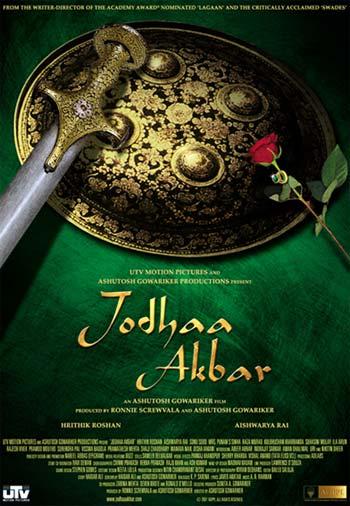
Ashutosh Gowarikar’s Jodhaa Akbar, released on February 15, was wading through troubled waters even before it hit the screens. Distributors in Rajasthan desisted from screening it before being banned in the state for depicting Rajput history inaccurately. The movie initiated riots, though on a minor scale, in UP, Delhi and the NCR region. As political parties like the Vishwa Hindu Parishad (VHP) geared up to grab their ‘fair’ share of the spotlight, Jodhaa Akbar, thankfully, has managed to grab eyeballs for better reasons too. However, there is something here that we are refusing to acknowledge. History is being repeated here - Mangal Pandey: The Rising directed by Ketan Mehta was chastised for ‘building’ a relationship between the rebel and a ‘court-dancer’. Various people, and political parties, took offence to this distortion of ‘history’ as it insulted a hero of high moral grounding. The disjunction between the content of history books and what gets portrayed on celluloid seems to be getting harder to resolve with every new foray into making epic movies. Gowarikar may have attempted to make a love story out of popular folklore; one that was easily accepted in the 1960 blockbuster, Mughal-e-Azam; but his movie has succeeded in transcending the popular and has touched a rather raw nerve- one belonging to the Indian public, nonetheless.
Lokendra Singh Kalvi, representative of the Rajput Kalvi Sena, has criticised the Censor Board for overlooking this “obscenity being committed on history” and letting film makers get away with deceiving the masses. Their bone of contention: Jodha bai was Akbar’s daughter-in-law, not wife. Harkan Bai, who was his wife, hailed from Ajmer and not Jodhpur. Maybe Gowarikar will stand corrected for this ‘slip’, but how exactly is this hurtful to the Rajputs’ sentiments and honour? Political parties like Akhand Bharatiya Morcha and VHP too feel outraged enough to support these claims, in a bid to secure future support to their ‘cause’. And the media has provided ample coverage of enraged youths burning posters and vandalising public property, making the whole issue rather graphic.
While the concerned parties intend to drag Gowarikar to court, the Constitution’s position on defamation is clear. Only when some form of communication is harmful to a living person’s reputation, does the issue of slander come in. Maybe we are taking ourselves a bit too seriously and our right to freedom of speech not seriously enough. In cases as this, it is the creative liberty of individuals that gets targeted inadvertently. In an atmosphere where mobs erupt like fire in dry, dead forests, the subjects of the Indian democracy seem to find it increasingly hard to digest multiple interpretations. Maybe its time to take Hrithik Roshan’s advice: “It’s a film. Go grab your popcorn and watch the film. Enjoy.”


2 comments:
I quite agree with you. My disgust for militant fundamentalism is deep rooted. Well i guess Mr Gowarikar should fund the movie tickets for those unemployed b******s so that they can be kept occupied and off from our streets..
The language is fresh and new...You are kind of inspiring me.
absolutely spot on....its disgusting how people(yess....ur right.... m referring to those f****** politicians n other religious fundamen...whatever they are.....!!) in our country find time for these inconsequential n illrequired debates..!!!!!!!!!!phew........
nice article though...the movie was on a n "epic" scale...n m love with the last line;)..heehheeehe
Post a Comment